A yard and storm debris bin is a loader-you-fill service, not a crew that hauls the pile for you - you load it at your own pace, and the truck returns to take it when you say go. That distinction matters most after a…
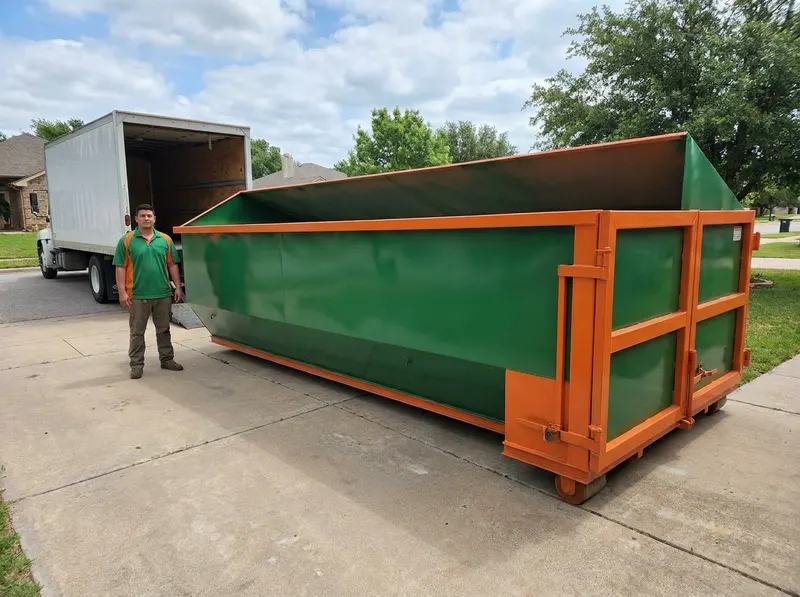
A yard and storm debris bin is a loader-you-fill service, not a crew that hauls the pile for you - you load it at your own pace, and the truck returns to take it when you say go. That distinction matters most after a storm in older tree-heavy neighborhoods like Castle Heights, Sanger Heights, and Dean Highland, where downed pecan and oak limbs pile up faster than a single truck bed can clear. Storm debris is heavy and bulky at the same time: a 20-yard bin holds roughly eight pickup-truck loads of brush and limbs, so one drop often finishes a full-yard cleanup that would take a half-dozen dump runs.
Size decisions follow the job. A 10-yard bin ($595) fits a routine hedge trim, flower-bed clear-out, or a small fence removal in a tight Brook Oaks or North Waco lot. A 20-yard ($695) suits a storm-knocked tree and the branches that come with it. A 30-yard ($795) or 40-yard ($895) handles a lot full of limbs after a line of Central Texas thunderstorms, or an acreage clear in Hewitt, Woodway, or Cottonwood Creek where several trees came down at once. The trade-off is simple driveway math: a larger bin needs about 22 feet of straight clearance and takes more of your parking pad, while a 10-yard tucks into a short drive but fills quickly with bulky brush. Brush compresses less than people expect, so err one size up when the pile is mostly branches rather than leaves.
Yard debris must stay reasonably clean to be composted or mulched rather than landfilled - the EPA's guidance on organic yard trimmings explains why separating green waste from household trash keeps disposal costs down and keeps the flat price flat. That is why the bin is for brush, limbs, grass, leaves, and clean wood only. Treated lumber, painted fence sections, and large stumps have different handling, and yard-waste recycling guidance notes that dirt and sod are extremely heavy and can push a load over its weight band, so soil and rock are kept out of a straight debris rental. Items the bin cannot take include tires, batteries, propane tanks, and anything on the EPA list of household hazardous waste; motor oil and pesticides go to the McLennan County collection program, not the dumpster.
Step 1: call (254) 244-4385 or text a photo of the pile. Step 2: the team recommends a size and states the flat price before scheduling. Step 3: the bin arrives in a confirmed window, set on boards to protect concrete. Step 4: you load limbs and brush over your rental days. Step 5: the truck returns at the agreed pickup time and hauls it to disposal. Placement on a public street or alley in neighborhoods like Mountainview or Landon Branch can require a right-of-way permit from the City of Waco; a driveway drop never does. Drivers follow OSHA material-handling practices when positioning the roll-off so limbs loaded near Cameron Park or Lake Waco cleanups are set safely clear of overhead lines.
Weight still matters even with flat pricing: wet brush after rain weighs far more than dry, and arborists following ISA tree-care standards note green wood can run double the weight of seasoned wood. Load heavy limbs low and spread the pile so the bin is level at the fill line, a loading approach echoed by federal severe-weather cleanup guidance for safe debris staging. For storm recovery after a declared event, FEMA debris-removal information can shape how vegetative debris is sorted, and the Texas Commission on Environmental Quality sets the disposal rules the haul must meet. Composting the clean green portion follows the same science the USDA soil-health program describes for returning organic matter to the land, which is one reason yard debris is kept separate from mixed trash.
Every job gets a firm, written price after an on-site visit.
Tell us about your yard & storm debris dumpster rental job in Waco and we'll send a clear, written quote, usually the same day.
 Load Legends Dumpster Rentals